HTBOOK vs Excel Sheets: Why Software is Better for Transport Businesses
A comparison of using Excel versus specialized software like HTBOOK for transport operations. Covers efficiency, automation, real-time updates, error reduction, and centralized data management in logistics and fleet management.

Smart Management
Advanced business workflow system
24/7
Support100+
Modules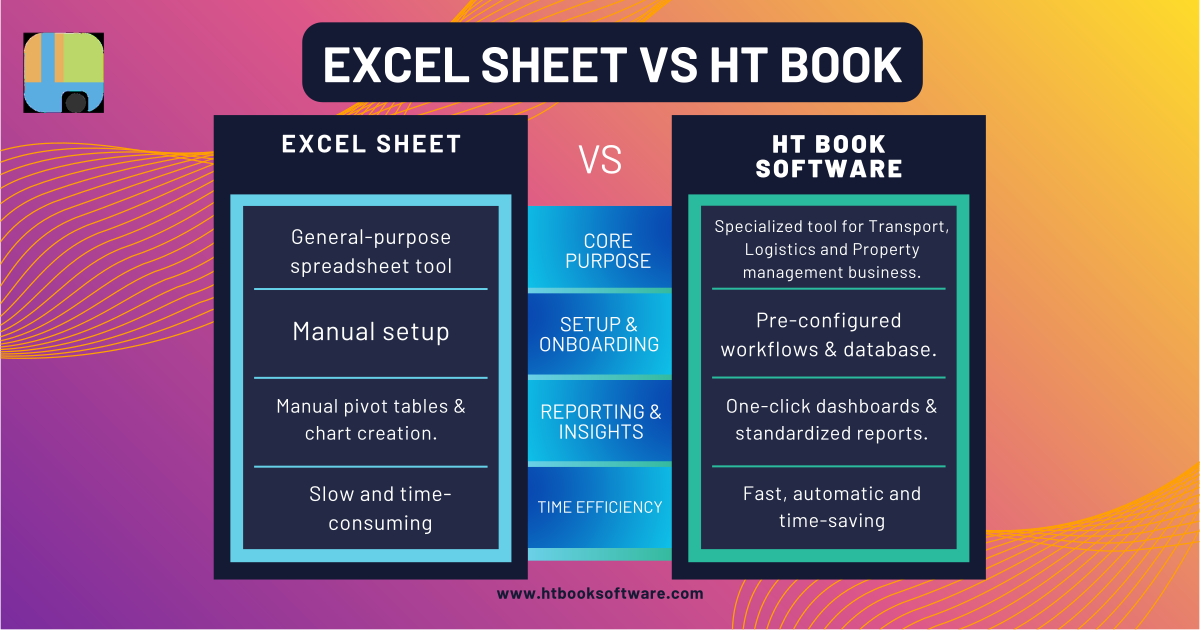
Overview
HTBOOK vs Excel Sheets: Why Software is Better for Transport Businesses
Excel is a powerful generalist tool, but it wasn't built for the specific complexities of hospitality management. Adapting it requires constant manual work, leading to errors and inefficiency. HTBOOK was designed from the ground up for hotels, turning those spreadsheets into a seamless, automated system. It’s the difference between building your own tools and using a professional solution crafted for your success.
Comparison Between Excel Sheets and HTBOOK:
| Feature | Excel Sheets | HTBOOK Software | HTBOOK Advantage |
| Core Purpose | General-purpose spreadsheet tool | Specialized tool for Transport, Logistics and Property management business. | Built for your job. |
| Setup & Onboarding | Manual setup: you build templates, formulas, links. | Pre-configured workflows & database. | Get started in minutes, not days. No setup guesswork. |
| Reporting & Insights | Manual pivot tables & chart creation. | One-click dashboards & standardized reports. | Make data-driven decisions instantly. No analysis paralysis. |
| Scalability | Becomes slow and unmanageable with large datasets. | Cloud architecture built to scale with your business. | Performance that grows with you. |
| Time Efficiency | Slow and time-consuming | Fast, automatic and time-saving | Easy and fast. |
| Trip Planning | Manual entry; hard to organize and update | Automated trip planning with schedule and route tools | Best for your specific business |
| Driver Assignment | Must assign drivers manually in sheets | Easily assign drivers with one click | Driver management. |
| Live Updates | No real-time changes or alerts | Real-time updates and alerts for trips and routes | Live Tracking |
| Error Handling | Mistakes are common and hard to catch | Auto-checks reduce errors and make adjustments instantly | Error free and reliable. |
Problems with Excel Sheets:
Managing bills in Excel is a tedious and error-prone process. Each invoice must be created manually, consuming valuable time and carrying a high risk of mistakes in amounts or customer details. This system lacks automation, providing no automatic reminders for unpaid invoices, which delays cash flow. Furthermore, tracking payment status becomes a manual hunt, making it difficult to instantly see which invoices are settled or pending. Compounding the problem, all records are siloed in different, disconnected files, leading to confusion, version chaos, and a significant administrative burden just to maintain a basic financial overview.
HTBOOK Software Solutions:
FAQs
Frequently asked questions about HTBOOK vs Excel Sheets: Why Software is Better for Transport Businesses
Transport management software automates daily operations, reduces manual data entry, improves accuracy, and provides real-time access to bookings, vehicles, drivers, invoices, and reports, whereas Excel sheets require manual updates and are prone to errors.
Excel spreadsheets can become difficult to manage as the business grows. Common challenges include duplicate data, limited collaboration, reporting delays, data loss risks, and difficulty tracking fleet operations in real time.
HTBOOK centralizes bookings, fleet management, driver assignments, accounting, invoicing, and reporting in one system, eliminating the need for multiple spreadsheets and manual calculations.
Yes. HTBOOK automatically generates reports for bookings, revenue, expenses, vehicle performance, driver activities, and profitability, helping businesses make faster and more informed decisions.
Yes. Unlike Excel sheets, transport management software is scalable and designed to handle increasing volumes of bookings, vehicles, customers, and financial transactions while maintaining accuracy and operational efficiency.